Ole Søeberg
Equity strategist, Brock Milton Capital AB

The Warsaw Stock Exchange opened on 16 April 1991 — fittingly, in the former headquarters of the Communist Party. Five freshly privatised companies were listed: Tonsil, Próchnik, Krosno, Exbud and Kable. At that first session the gap between bids and offers was twelve-fold; one session later it had narrowed to two-fold. That is what price discovery looks like when a market is born.
Then came the kind of move frontier markets are famous for: the WIG index rose from 635 in June 1992 to 20,760 in May 1994 — more than 30-fold in under two years — before falling hard. Liquidity was a rumour, volatility was the norm and position sizes were small. It was exciting, but no one would have called it an asset class for a pension fund.
Europe’s growth champion
Fast-forward 35 years and the contrast is striking. Our first meeting, with PKO’s macro team led by Marta Petka, opened with the headline “Poland: Europe’s growth champion” — and the numbers back it up. Measured on purchasing-power parity, Poland is now on a par with Spain and Japan.
What drove it? Capital expenditure, above all by foreign companies that set up in Poland and supporting an export boom. Around 60% of the new jobs created since 2000 are export jobs, spread across chemicals, metal products, machinery, electronics, motor vehicles, batteries, plastics and pharmaceuticals. Services are two-thirds of the economy, and Poland exports those too — IT, business services and transport.
The household story is just as strong. Real incomes are up about 80% over the past twenty years, against roughly 25% in the US and 10% in Germany, and more jobs have been the main driver. The savings rate is about 10%. Some 80% of Poles live in a flat they own, which is their main savings asset. Financial assets are still modest and sit mostly in cash (53%), with equities at 23% and pensions and life insurance at 12%. A new Swedish-style ISK investment account is meant to move some of that cash into equities.
The next leg is public investment. Poland is receiving about €40bn from the EU’s €575bn Recovery and Resilience Facility, alongside some €44bn of EU-backed defence investment. Defence spending is now around 5% of GDP, and rail investment is another big driver. Market earnings are expected to grow about 20% in 2026, led by refiners and utilities.
The soft spots. Energy is still 53% coal, 14% gas and 31% renewables, and power prices are at the high end in Europe. Immigrants now make up 20–50% of the workforce in cleaning, construction and security. Joining the euro is not on the agenda: Poles like the EU but not the constraints that come with the single currency.
Poland in numbers
| GDP per capita (PPP), % of EU average | 44% (1995) → 81% (2025) |
| Real household income growth, past 20 years | Poland +80% · US +25% · Germany +10% |
| Share of new jobs since 2000 in export sectors | ~60% |
| Home ownership (Poles living in a flat they own) | ~80% |
| Defence spending | ~5% of GDP |
| General government deficit | ~7% of GDP |
| WSE daily turnover / forward P/E | USD 700m / 11.5x |
| Expected EPS growth, Polish market 2026 | ~20% |
At the Swedish Embassy
The embassy is a piece of history in its own right. It was purpose-built in 1939, and the first ambassador, Erik Boheman, had a shelter built in the basement. It closed during the Second World War and reopened in 1945. Today it has 26 staff and an agenda dominated by Baltic Sea security. As our hosts put it, history matters enormously in Poland.
The business numbers say more than any speech. There are 734 Swedish companies active in Poland, employing 120,000 people, and they reinvest 93% of their Polish profits locally, against an average of 55% for EU investors. Poland is no longer competing with low wage countries to make simple products. It is moving up the value chain into R&D, engineering and IT, and the Innovate Poland programme channels capital to smaller innovative companies. Poles who emigrated to the rest of Europe are coming back.
The cultural observations were just as useful. Poland decides quickly, sells hard and follows up, which is very different from Swedish consensus-building. It is one of Europe’s less urbanised countries, yet ten Polish cities are larger than Gothenburg. Poles distrust Russia far more than Germany, while staying reserved about both. The Ukrainian population has grown from about 1 million before the invasion to about 2 million, and Russian disinformation pushes “they are taking our jobs” stories hard.
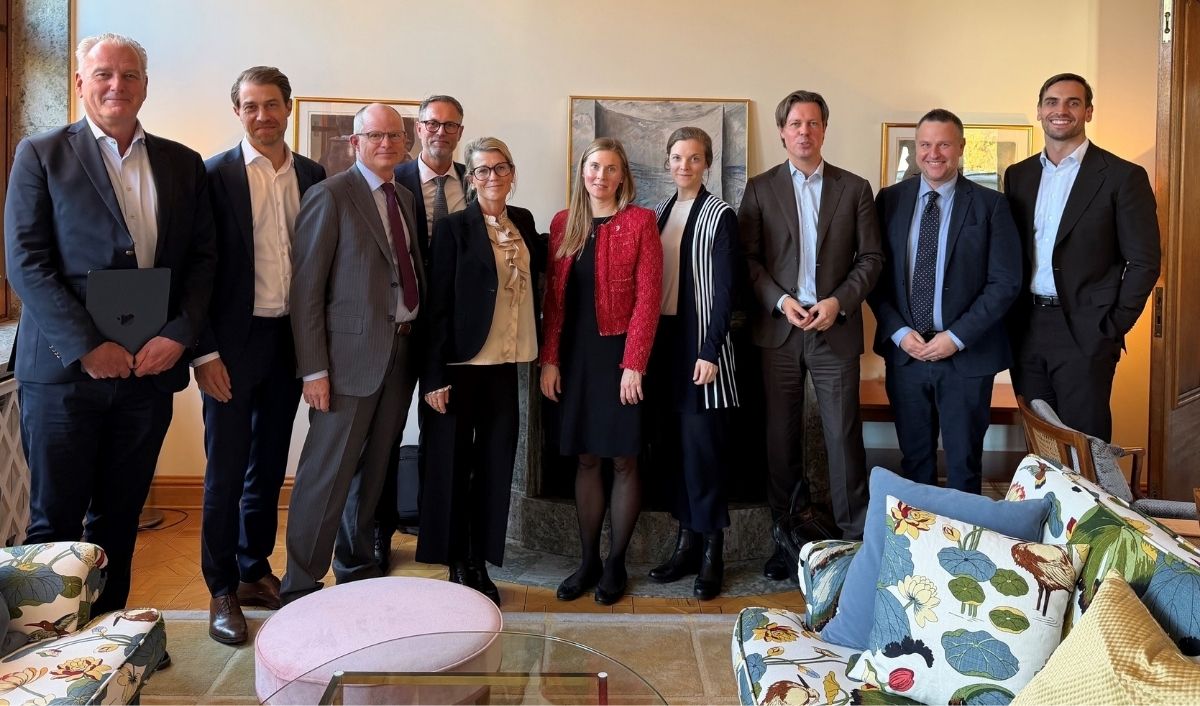 Team BMC with employees of the Swedish embassy
Banks, an exchange, satellites and apartments
PKO BP — the national champion
The country’s largest bank earns a high return on equity, and the market it serves is still far from mature. Penetration of credit, wealth products and digital services still has a long way to run. As the chart shows, the market has noticed.
mBank — the bank for the young and aspiring
We met chief economist Marcin Mazurek together with treasury and IR. mBank was Poland’s first online bank in the late 1990s and still targets younger, aspiring customers. Its management aims to roughly triple net profit by 2030. The balance sheet shows how the whole sector works: PLN 249bn of deposits against PLN 151bn of net loans. Banks pay close to nothing on much of that funding and can park the surplus at the central bank at 5–6%, which is very profitable. Mazurek expects trend growth of about 3% over the next decade and three rate hikes in the next nine months as the Middle East energy supply shock works through, with rates lower again in 2028. There is a corporate angle too: Commerzbank owns 69% of mBank, Poland’s number five bank, so UniCredit’s bid for Commerzbank could well bring mBank into play.
Warsaw Stock Exchange — a very happy CEO
The CEO had good reason to be in high spirits: the day we visited marked the market’s 37th all-time high of 2026. Daily turnover is about USD 700m (against roughly USD 2,000 for the whole first session in 1991), the main index is up about 35% this year and trades on 11.5x forward earnings. ETF inflows are USD 1.7bn in 2026, but only about 20% of that goes into WIG-listed products. A new trading platform handles one billion operations a day, 20 times the old capacity, and up to 100,000 orders a second. Our one reservation is costs. The exchange builds its own systems and carries a large support staff, so its cost/income ratio is high, which becomes a problem if growth stalls. The CEO’s answer was pension funds and the new ISK account.
Creotech Instruments — Poland in space
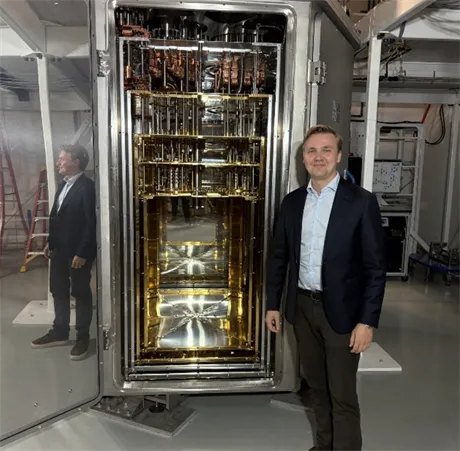
This was the most energetic presentation of the trip, from a young-looking founder with a mission of “European space excellence”. Creotech has 300 employees, sales of PLN 146m at a 38% EBITDA margin, a backlog of PLN 587m and a pipeline of PLN 8.3bn. It can build ten satellites a year and targets roughly four times its current revenue by 2030. Its best seller, the HyperSat Eagle, has four units in orbit and two more due in 2027. Its scientific work includes components for Mars and Jupiter missions. The largest revenue stream, however, is the platform around the satellites: ground-based data, storage and cybersecurity. Launches currently go on US rockets, but Creotech is shifting to European, Korean and Japanese launchers, which cost more.
Dom Development and Budimex — building the new Poland
Dom Development sells about 5,000 apartments a year and builds entire small towns, not single blocks. The detail that stuck with us is that Warsaw residential prices are now level with Stockholm and Gothenburg. With 80% home ownership and housing as the main store of savings, that says a lot about how far household wealth has come. Budimex, the country’s leading contractor, sits right in the path of the rail, defence and EU-funded infrastructure programmes.
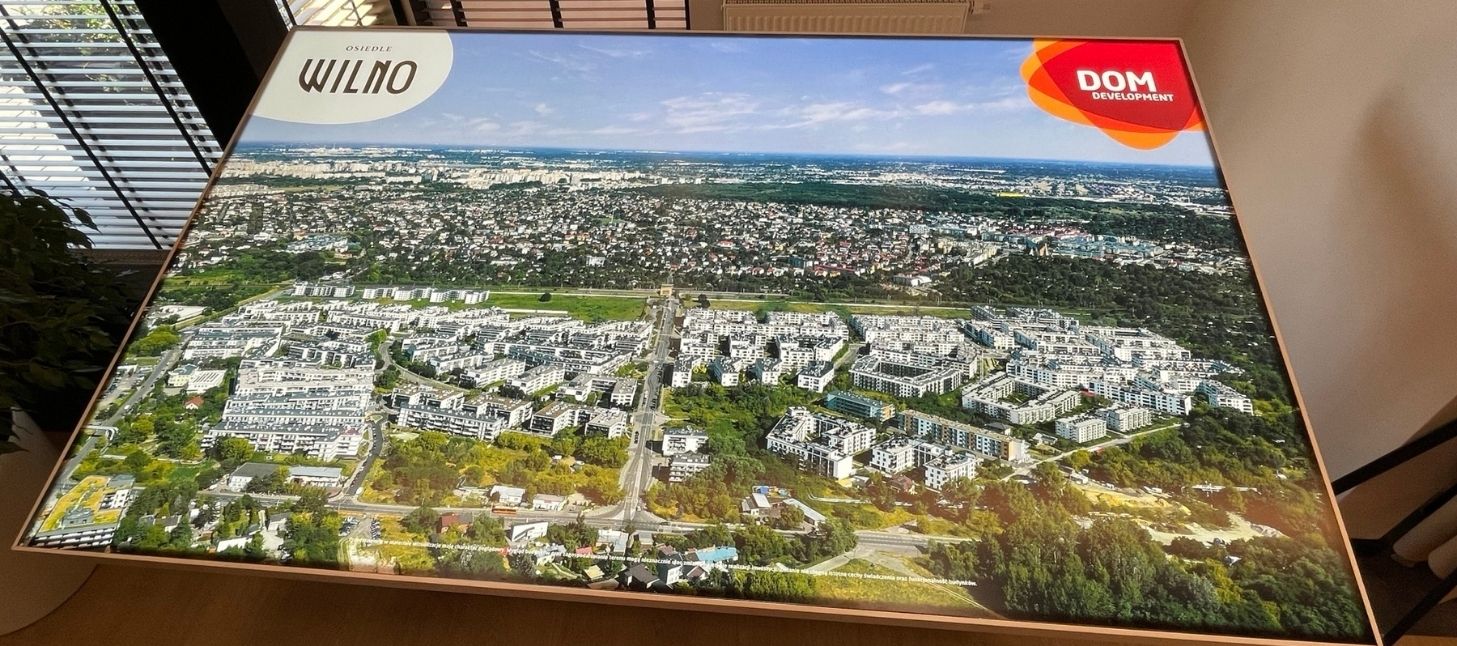 Since 2012, Dom Development has built a small town with 10,000 inhabitants just outside Warsaw.
What could go wrong
Stalemate politics.: Political lines are drawn sharply. Donald Tusk is a skilful prime minister but lacks a clear majority, so the economy is being driven by the market and EU money rather than by reform. The next election, in October 2027, is hard to call, and a Le Pen win in France could give the far right a tailwind.
Fiscal slippage: The deficit is about 7% of GDP, and defence spending is a big part of it.
Ukraine: Peace could make Poland the hub for rebuilding Ukraine, but outcomes differ sharply depending on whether Russia or Ukraine has the upper hand. Ukraine’s population has shrunk from 42 million to an estimated 25–30 million, and many have settled in Poland permanently.
Energy and rates: A coal-heavy grid means expensive power. If rates are hiked as mBank expects, bank margins benefit but housing and consumers feel the squeeze.
What we take home
Poland has seen a massive wealth creation over the last 35 years and it will continue at a faster chip than rest of Europe Few markets have travelled that far in one investing career.
Equity strategist, Brock Milton Capital AB
Blog | 30 okt 2026

Blog | 5 okt 2026
Blog | 1 okt 2026