Henrik Milton
CEO and Portfolio Manager with a focus on tech and software, Brock Milton Capital AB

The figures speak for themselves: the total market cap of the Tech Hardware & Semiconductors, Media, Software & Tech Services sectors is around 270 billion Swedish kronor and they account for 26% of the global MSCI ACWI index. The ten largest players—Nvidia, Apple, Alphabet, Microsoft, TSMC, Broadcom, Samsung, Tencent, ASML, and Micron—together represent about 180 billion kronor. (Market cap as of March 20, 2026. Source: Bloomberg)
Looking back, both Japan and Europe were early semiconductor pioneers. During the 1960s and 1970s, transistors were primarily used in consumer electronics such as radios and TVs, with companies like Sony, Panasonic, Sanyo, and Philips at the forefront. Interestingly, ASML was spun off from Philips in the 1980s.
The US's IBM was among the first to launch personal computers, the first coming in the 1980s. In 2025, IBM sold its personal computer business to China's Lenovo. Japan has continued since the 1970s to develop its semiconductor industry through computer manufacturing and chips for vehicles. Meanwhile, Europe has almost exclusively targeted semiconductors for the vehicle industry. I believe this focus on vehicle chips has proven a sizable misstep, as Europe is not self-sufficient in semiconductors for computers and data centers.
Countries that dominate
Today, in principle, all chips come from semiconductor plants in Taiwan, China, South Korea, the US, and Japan. The European companies active in semiconductors for vehicles include Infineon, STM, and NXP Semiconductor. Meanwhile, Taiwan has emerged as one of the world's most important countries for semiconductor manufacturing, with TSMC as the clear leader in chip manufacturing for the most important companies, such as Apple, Nvidia, AMD, Broadcom, and so on. TSMC has built its domination over the long term through research and development as well as further development of manufacturing methods. No other company today is as skilled at mass-producing the most advanced chips with the shortest node spacing. I can see from this recent trip to Japan and Taiwan that a large part of Taiwan's business sector is concentrated on being subcontractors to TSMC. It is also key to Japanese and US machine suppliers that provide equipment to TSMC.
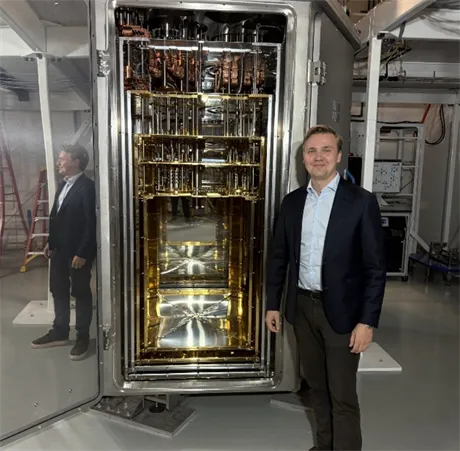
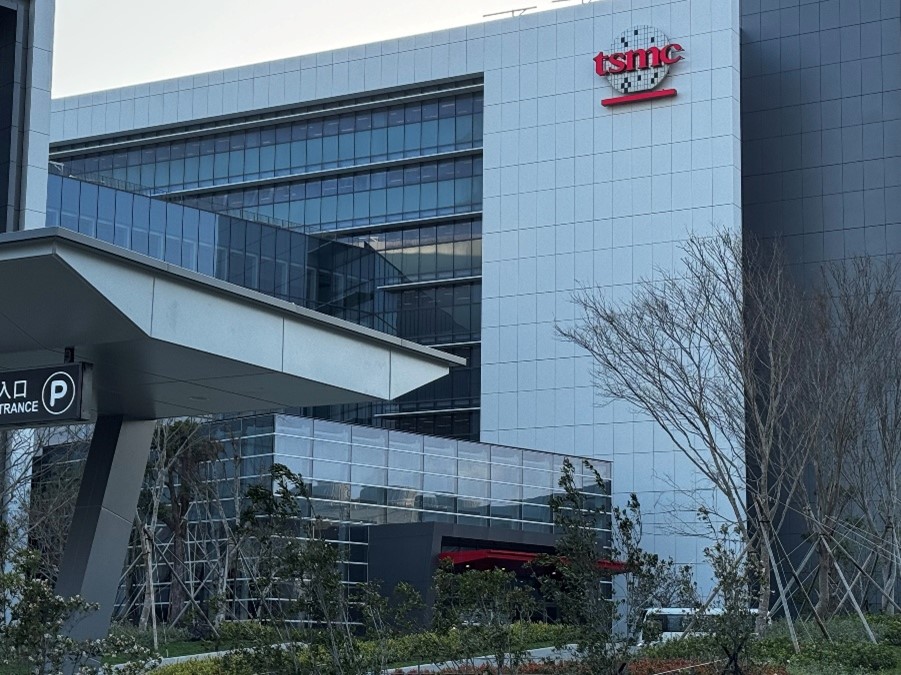 Caption: TSMC's new semiconductor plant in Hsinchu, Taiwan. At this new plant, TSMC will develop the latest chips with the smallest node spacing.
Traveling a few hours north from Taiwan, I visited South Korea and a large production facility manufacturing consumer electronics, smartphones, and memory and logic chips. Samsung and LG are giants in consumer electronics, and the South Korean companies have close ties to Japan, China, and Taiwan.
The two leaders in South Korean semiconductors are Samsung and SK Hynix. Samsung also makes logic and memory chips. When it comes to semiconductor manufacturing, Samsung is #2 in the world after TSMC, with #3 being the US's Intel, which primarily manufactures chips in the US. SK Hynix dominates the memory chip manufacturing niche, mainly building NAND and DRAM, as well as a new variant of DRAM called HBM (High Bandwidth Memory). These new chips are essential for AI, and to make AI chips as fast as possible, HBM memory chips are mounted on the same circuit board as the CPU.
Japan was early in semiconductor manufacturing, but my impression is that it has slipped behind the US, Taiwan, and South Korea. Japan is excellent at making advanced equipment that is part of the chip production chain, though, with players like Tokyo Electron, Advantest, Fujikura, and Shiabura Mechtronics, which I met on my trip.
The players in Japan are extremely skilled and long term in their thinking, undertaking a great deal of basic research into semiconductor technology. Japanese machinery and equipment manufacturers also deliver to China, which is the fastest-growing market for many of these Japanese companies.
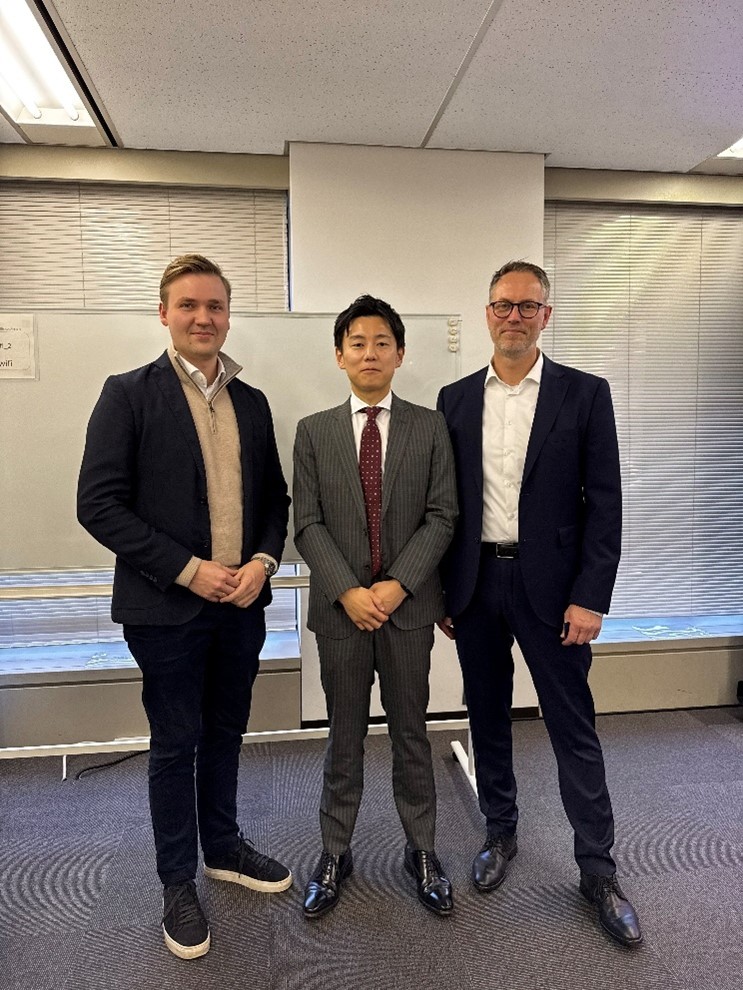 Caption: Herman and I meeting Fujikura's IR in Tokyo, March 2026.
Before moving on to describe the US's semiconductor manufacture, let's take a stop in China first. China is probably the country, along with South Korea, dominating the manufacture of mature nodes—simpler chips used in TVs, vehicles, smartphones, washing machines, vacuum cleaners, and so on. As most of you know, the US government has imposed export restrictions on machine equipment for advanced nodes (those with the smallest node spacing) coming from Japan, South Korea, and the Netherlands and destined for China. The best-known export ban has restricted ASML from selling its EUV machines to China. The reason for these export restrictions is that the US doesn't want China to gain access to the absolute best AI chips, fearing that China could represent a tech threat to the US. What we've seen and heard from China is that the country is now on its own path to develop advanced AI chips by using other machinery from Japan and the Netherlands, among others. We believe China is working on its own "EUV machine" for advanced semiconductor manufacturing. China has long been able to buy DUV machines from ASML as these are not burdened with export restrictions. We see that China has developed its own manufacturing technique for advanced chips using DUV machines down to 7-nm node spacing. For comparison, TSMC can build a chip with 2 nm. Although this doesn't sound like a significant difference, in practice it means a vast disparity in technical level. China's best-known fabs (manufacturing companies) for its own semiconductors are SMIC and Hua Hong.
In the US, the states of California, Arizona, and Texas dominate the design and manufacture of semiconductors, while Silicon Valley is where the most advanced AI chips are developed. Nvidia is the king of semiconductors, while lagging far behind in second place is AMD. Another key company for semiconductor design is Broadcom, which manufactures GPUs. These GPUs are called ASICs (Application Specific Integrated Circuits). When Alphabet, Amazon, and Meta, for example, design their own AI chips, they do so in collaboration with Broadcom. Old-timer Intel, which is trailing in the AI race, can now prove a key player after Nvidia has stepped in and bought 5% of the company. We assume that Nvidia shares technology with Intel, meaning the latter can become more relevant in the future with its x86 chip architecture. Another major industry player is Arista Network, which handles front-end communication—connecting various data centers with its tech. A hot area within communication these days is data transfer via optical rather than copper cables. The speed is much faster via fiber-optic cables and transmission delays are reduced. Arista Networks also offers back-end communication technology, connecting CPU, GPUs, and memory chips on the back of server racks. This tech also competes with Nvidia's NV-link. So far, all advanced chips have, in principle, been made by TSMC in Taiwan. In recent years, TSMC has also constructed plants in Arizona, meaning that advanced chips can now be manufactured on American soil, a project driven by both former President Joe Biden and sitting President Donald Trump.
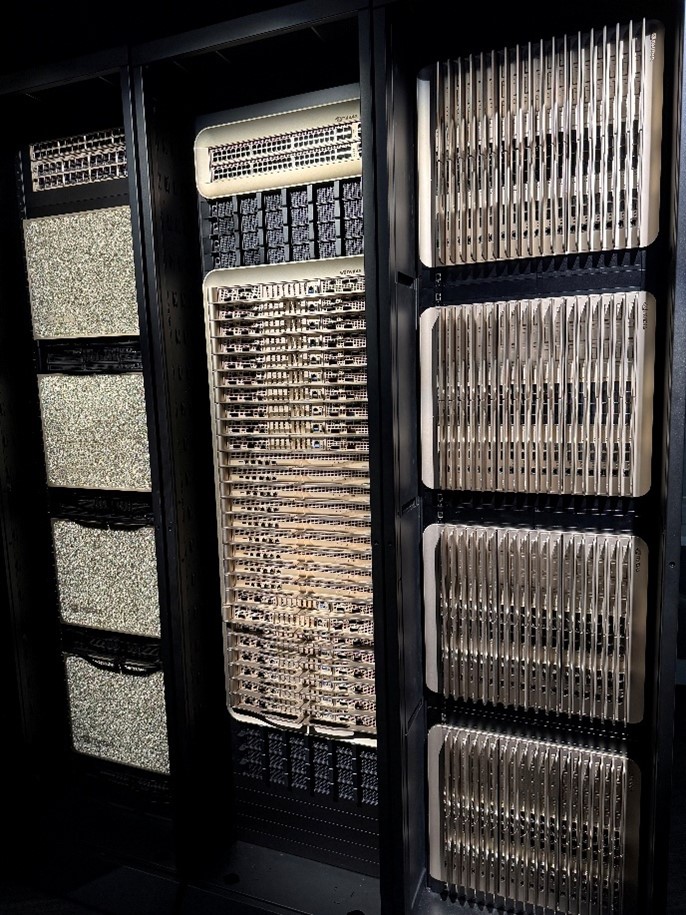 Caption: Server rack from Nvidia. I took this photograph at Nvidia's exhibition center at its Santa Clara headquarters.
How many of the leading semiconductor companies are in Europe? The answer is one, and that is ASML, which manufactures EUV and DUV machines. Besides ASML, Europe has no companies of any importance within the sector. We can thank Dutch company Philips for having the foresight to spin off ASML in the 1980s, allowing ASML to focus on its core skills and develop into the world-leading company it is today. I have a trip booked to visit ASML's headquarters at the end of May, when, along with other investors, I'll meet the company's CEO. Keep an eye out on LinkedIn or our blog for comments on this.
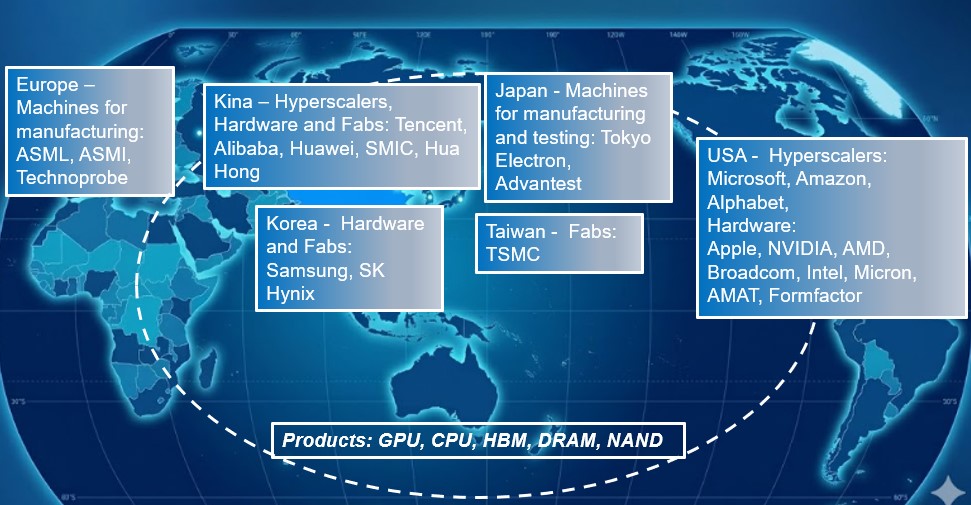 Caption: The countries around the Pacific Ocean dominate global semiconductor manufacturing.
"Different regions of the world excel at different things"
This is a phrase my investment manager colleague Andreas Brock coined a few years ago, and one that remains as true today. In essence, this means that in Europe, for example, we excel in the manufacturing sector and at building cars. The best pharma companies can be found in East Coast US and Europe. When I look for great semiconductor companies to invest in, I turn towards the US, Taiwan, Japan, and South Korea, as that is where the best of these can be found.
We learn so much when visiting companies
At Brock Milton Capital, we love to meet companies and go on analyst trips. To increase my knowledge about a company, meeting it is the best way to learn more. Much can, of course, be gathered by reading annual reports and analysis, but for that extra bit of information, a company meeting is the only way. By meeting companies, we increase our knowledge and can make better investment decisions that benefit you as unitholders.
Our exciting new BMC Global Technology fund
In November 2025, we launched our new tech fund, BMC Global Technology, investing in the strongest tech trends and in companies that benefit from technology. We believe that tech companies are especially interesting right now, given the recent stock market declines. Geopolitical turbulence has hit share prices in the sector hard, causing valuations to drop significantly.
In January, we met Italy's REVO Insurance, a tech company focusing on insurance. The CEO said something particularly wise: "Technology is what enables a company to grow faster." And he is correct. And as a saver, you should include a technology fund in your long-term savings plan.
Even though we also love computers and tech, this blog post was written by a human, Henrik Milton.

CEO and Portfolio Manager with a focus on tech and software, Brock Milton Capital AB
Blog | 5 okt 2026

Blog | 1 okt 2026
Blog | 23 sep 2026